
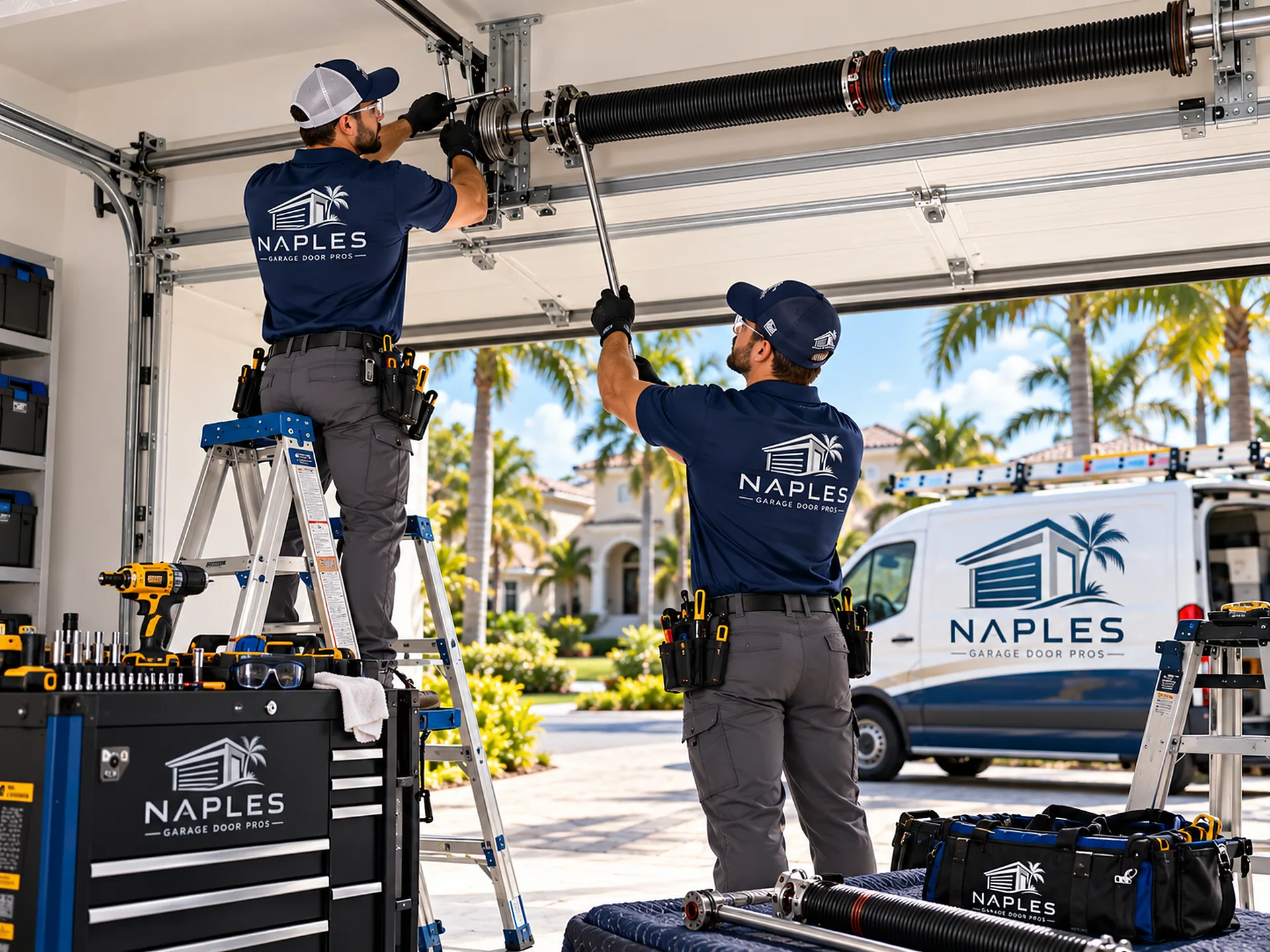
That bang in the garage was probably a spring
The springs do the lifting; the opener only steers. With one broken, the door is suddenly too heavy to raise safely, by motor or by hand. Keep it closed, and text us a picture of the bar above it.
- On site: About 1 hour, one spring or two
- Florida license CGC15***92
Signs this is your problem
- A sharp crack from the garage, loud enough that you went to see what fell.
- Above the closed door, the coil on the bar has a gap of a few inches in it.
- The opener groans, the door rises a few inches, then it stops or reverses.
- The cables at the sides of the door have gone slack.
- Older doors may have long springs stretched beside the ceiling tracks; one has come apart or dangles loose.
- Door heavy, but no gap in any spring? Match what it does in the symptom guide. It broke with the door stuck open? That's an emergency call, at any hour.
Sized to the door you have today
The broken spring gets measured first: wire thickness, inside diameter, length and the direction it's wound. Then the door is weighed against it. Insulation, a reinforcement strut or a replaced section make a door heavier over the years, and the spring has to match what it weighs now.
Once the tension is off, the drums, cables and end bearings get a look. A two-spring door gets both springs in the same visit. Last, we balance the door and cycle it several times; with the opener released it should rest at waist height without drifting.
A spring that failed soon after a repair
If a spring broke within months of being replaced, keep the pieces and, if you have it, the receipt with the date. We compare the broken spring with the door's weight and explain plainly what happened. Sometimes the size was right and the spring had a flaw. Sometimes it was too light for the door, and a copy of the same size would fail the same way.
Salt air and the coils
Humidity and the salt in the air along the Gulf coat the coils in rust, and rust adds friction every time the spring winds and unwinds. A spring that looks orange or flaky deserves a look before it lets go. It's the same story in a canal home off Gordon Drive and in a house on a wooded lot in the Estates, just faster near the water.
Hands off the spring shaft
Each spring holds enough stored force to lift the entire door. The cones at its ends are held by set screws and turned with steel bars; loosen one without the bars and the spring unwinds in an instant, spinning whatever is attached to it. Don't adjust or loosen anything on that shaft, and keep the release cord alone while the door is raised.
Questions about broken springs
About an hour at the house, whether the door has one spring or two. That covers measuring, installing, balancing the door and running it through several test cycles.
No. Without the spring, the full weight of the door lands on the opener or on whoever lifts it, and it can fall. Leave it closed and unplug the opener until the spring is replaced.
Either the spring had a flaw or it was too small for the door, and measuring it shows which. Keep the broken spring and the date of the last repair; we show you the numbers before recommending a replacement.
Not required. The spring that didn't break has the same age and has made the same lifts, so it may be nearer the end than it looks, and we'll say so. It appears as its own line with its own price, and leaving it for later is your call.
One number, from the first call to the sign-off
Calls and texts to (239) 990-8829 are answered by a person, day and night. Text us a picture of your door, or of the sticker on your opener, and we'll tell you the likely cause, how long the fix keeps us there and the first opening on the schedule.